Who decided oysters were fancy?
Victorian Londoners ate oysters by the hundred million, often from a barrow in the street. Then the beds ran out, and the oyster became something you dress up for.
Picture a Saturday night in mid-Victorian London. A costermonger has wheeled a barrow of oysters into a poor neighbourhood, selling them cheaply to people who eat them on the spot. Nobody is discussing salinity. Henry Mayhew, who documented the capital's street trades in London Labour and the London Poor, reckoned in the 1861 edition that costermongers alone sold around 124 million oysters a year.
The London Museum, which holds Gustave Doré's 1872 engraving of a street oyster seller, cites that figure in its catalogue and works out that Londoners were spending something like £125,000 a year on oysters bought in the street. Other estimates put total consumption in the capital far higher: OSPAR, the North-East Atlantic marine commission, gives a figure of about 700 million oysters eaten in London in 1864. Historical numbers like these are rough, but even the cautious ones describe a city that treated oysters as everyday food.
Not that the trade was classless. Mayhew noted that costermongers never bought the expensive kinds, such as the prized Milton natives, and stuck to oysters of middling quality. Below those came the big, coarse-shelled oysters brought up from the Sussex coast that the costers called scuttle-mouths, which got a rinse with a pail of water in the yard and went straight onto the barrow. Some sellers ran afternoon rounds with them through the poorest streets. The better-off ate finer oysters as a starter; the poor made a meal of cheap ones. Price and status were already in play. They just operated in a world with plenty of oysters to go round.
That world did not last. OSPAR attributes the collapse of Europe's native oyster beds in the second half of the nineteenth century mainly to over-exploitation, with dredging and trawling damaging the beds themselves. Pollution in estuaries made things worse, harsh winters in the twentieth century killed off much of what remained, and the parasite Bonamia ostreae later caused mass die-offs. UK landings, OSPAR records, fell from around 40 million oysters in 1920 to about 3 million by the 1960s.
The same story played out on a bigger scale across the Atlantic. The Chesapeake Bay once held vast oyster reefs and supported a major commercial fishery. Overharvesting, habitat loss, disease and poor water quality took it apart, and NOAA estimates that only about 1–2% of the bay's historic oyster population remains.
When a food that used to be everywhere becomes hard to get, it picks up meanings that have little to do with flavour. Rarity becomes desirable. Knowing which oyster to order, how to eat it and what to drink with it turns into a kind of social currency. Nobody sat down and rebranded the oyster as a luxury; supply did most of the work, and dining culture filled in the rest over a few generations. Lobster has made a similar journey.
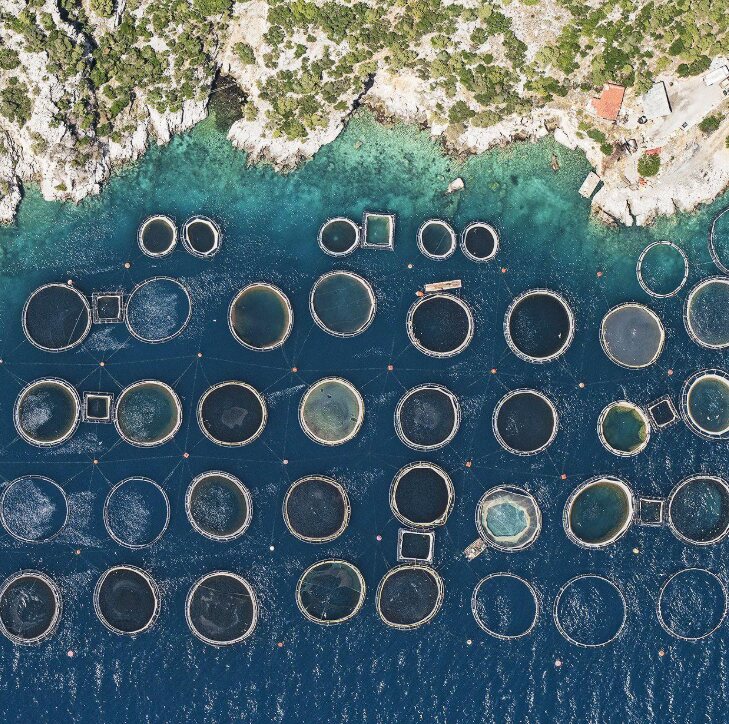
What brought oysters back to ordinary menus was not the wild beds. It was farming. In Britain, growers turned to the Pacific oyster to make up for exhausted native stocks. The standard account dates its introduction for aquaculture to 1965, though a recent reappraisal by University of Portsmouth researchers traces the first documented import back to 1890. Most oysters eaten in the UK today are farmed rock oysters. Oyster farmers buy or raise seed, tend it on trestles, ropes or seabed plots, and wait months or years for it to reach market size. The result is a supply that no longer depends on dredging the last of a wild stock.
That has a knock-on benefit for the wild side too. With farms meeting most of the demand, the remaining native beds can be managed for recovery, and restoration projects have grown up alongside the farms. In the Chesapeake, NOAA and its partners have rebuilt reefs across more than 2,400 acres in ten tributaries in Maryland and Virginia, and NOAA has said future work is likely to combine restoration, aquaculture and the wild fishery rather than treat them as rivals. Oysters filter water and build habitat for other species, so a healthy reef is worth having for its own sake. It is not the same thing as a farm, and neither replaces careful management of the water they grow in.
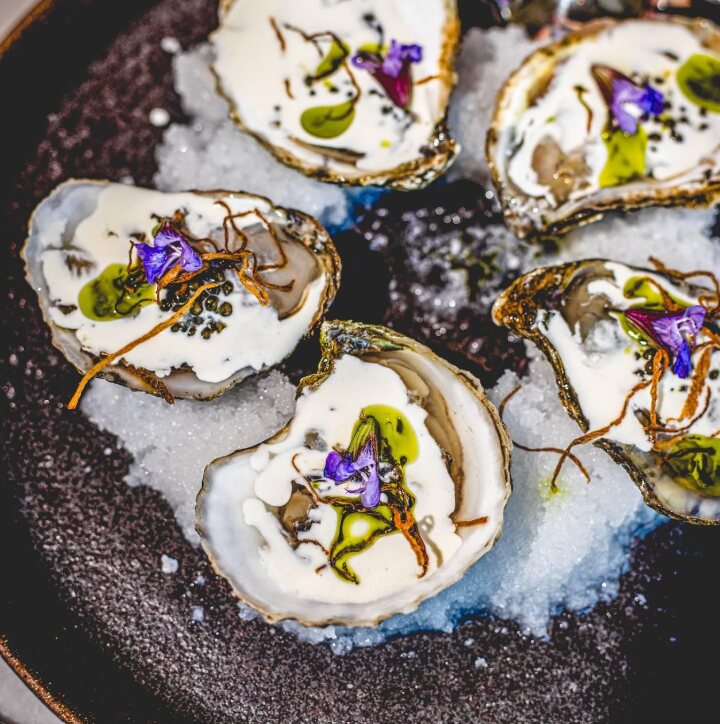
The provenance talk at the oyster bar has substance behind it. Oysters genuinely taste of where they grew and how they were handled, which is why growers name their sites and restaurants list them like wines. But the ritual sits on top of a simpler fact. The Victorian costermonger was selling cheap protein from the sea to people who were hungry. Farming has made that possible again, and the best argument for the modern oyster is that it no longer needs to be rare to be good.
Fresh Catch · The SALT. newsletter
Enjoyed this story? There's more where that came from.
Food, oceans, people and ideas. The most interesting stories from SALT., delivered to your inbox.
Free to read. Free to subscribe. Unsubscribe anytime. Privacy
About this story · 6 sources
Sources
- London Museum, "The oysterman" (Gustave Doré, 1872)
- Henry Mayhew, London Labour and the London Poor, Vol. 1, oyster selling (Tufts Digital Library)
- OSPAR Commission, Ostrea edulis beds background document
- NOAA Office of Response and Restoration, Chesapeake Bay oysters
- NOAA Fisheries, Oyster reef restoration in the Chesapeake Bay
- Humphreys et al., A reappraisal of the history and economics of the Pacific oyster in Britain (University of Portsmouth)
Spotted an error? Tell us. We correct the record openly.