The power of small fish.
Sardines, anchovies and their relatives are some of the most nutritious food in the sea, and among the most caught. Getting more of them onto plates, while still feeding the farms that need them, is one of seafood's quieter opportunities.
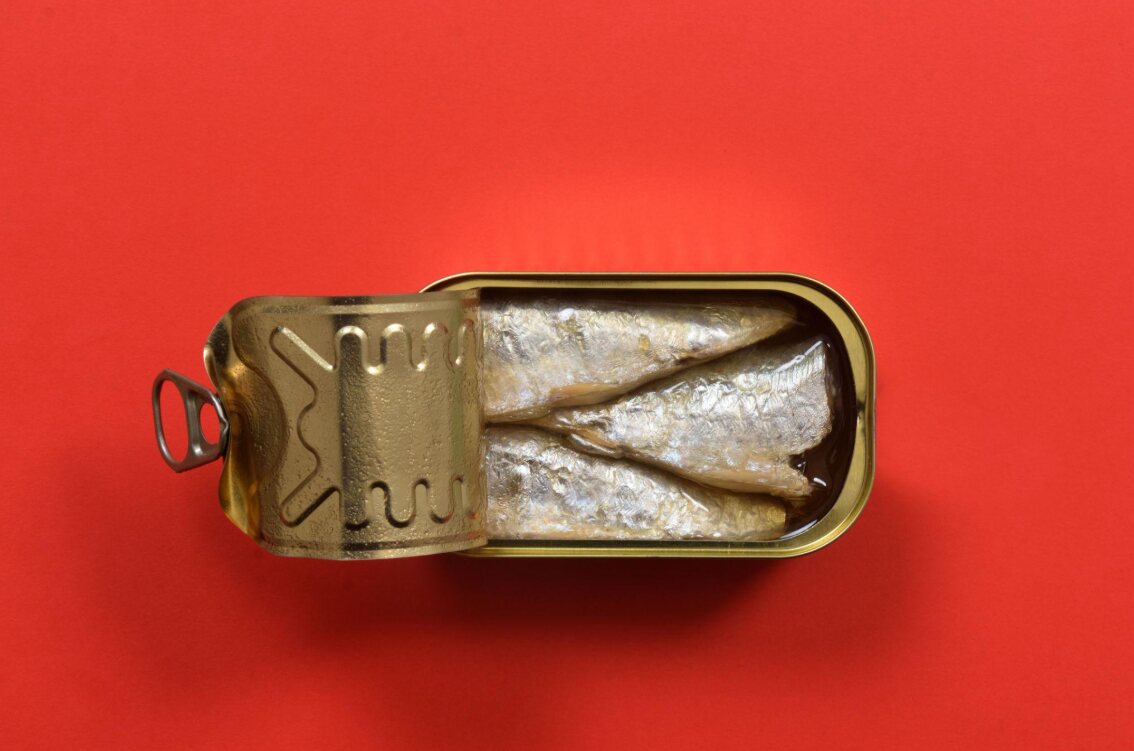
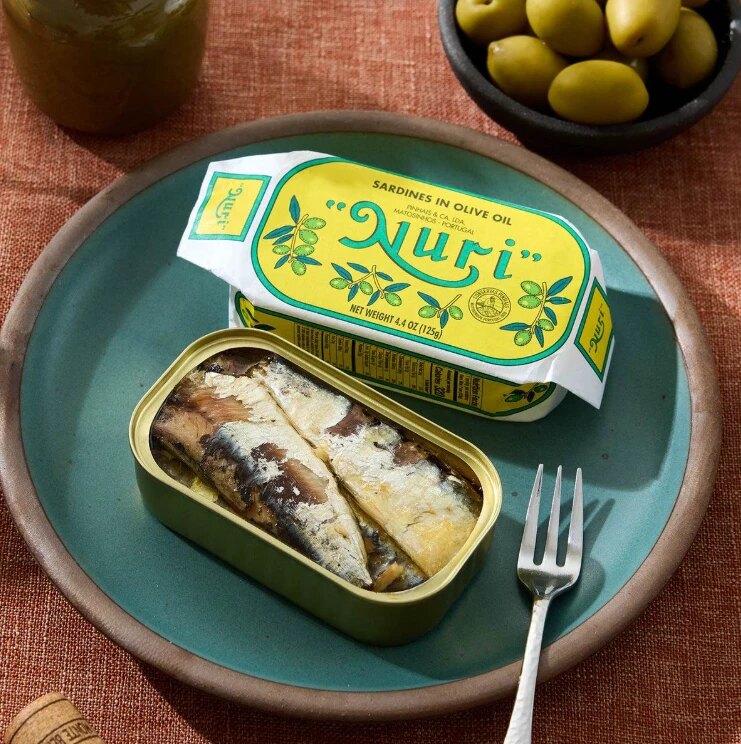
Open a tin of sardines and you are holding one of the most efficient foods the ocean produces. The fish are small, oily and fast-growing. They eat plankton near the bottom of the food chain, and canning softens their bones enough to eat, so a tin delivers protein, long-chain omega-3 fats and a serious dose of calcium in one go.
Small pelagic fish (sardines, anchovies, herring, sprats, sardinella, mackerel and their relatives) are also caught in enormous quantities. Forage fish of this kind make up more than a third of the world's wild marine catch, and the single most-caught species on the planet is the Peruvian anchoveta. Yet most of that volume never reaches a plate as fish. It is ground into fishmeal and pressed for oil, the bulk of it for aquaculture feed.
The nutritional case for eating small fish directly is strong. A 2019 study in Nature measured seven nutrients across more than 350 marine fish species and found that smaller species tend to carry more calcium, iron and omega-3s than larger ones, and that what a fishery contributes to diets depends far more on the species it lands than on the tonnage. In many countries where people lack enough of these nutrients, the authors found, the fish already being caught off their coasts contain more than enough to meet the dietary needs of coastal populations. Much of it is exported, processed into feed or priced beyond local reach.
Eating the whole fish matters, because much of the calcium sits in the bones. That is one reason small fish dried, fermented, canned or fried whole (dagaa around Lake Victoria, anchovy broths in Korea, boquerones in Spain, sardinella smoked on West African beaches) are often more nutritious, gram for gram, than a prime fillet of a large predator.
The anchoveta shows the trade-off at its sharpest. In Peru it makes up around three-quarters of marine landings by weight. Researchers at the University of British Columbia argued in 2013 that the fishery would be worth more if more of it went into food, since it accounted for most of the sector's landings but under a third of its revenue. The fishmeal industry's case is that there is little market for that much anchovy as food, since the fish is small, oily and spoils quickly, and that turning it into feed, much of it for farmed salmon and shrimp, is how it ends up feeding people at all.
Both points hold. Direct-consumption products from anchoveta exist but remain a small market, and building demand takes cold chains, processing capacity and products people actually want to buy. Where it works, the nutrients go straight to people instead of passing through another animal first.
In West Africa the tension is about food security, not markets. Sardinella and bonga are staple food along the coast from Mauritania to The Gambia, and fish supplies a large share of the animal protein people eat in Senegal. Campaign reports from Greenpeace Africa and Changing Markets counted dozens of fishmeal and fish oil plants in the region by 2019, and a 2023 study estimated that well over half of the pelagic catch by migrant fishers it examined was going to fishmeal factories in the countries studied. The reports cite FAO working groups that have described the sub-region's sardinella stocks as overexploited and warned of a threat to food security. This is the clearest case for keeping small fish as food first: a scarce local staple being diverted into an export ingredient.
Aquaculture is not only a buyer of small fish. In Bangladesh, where inadequate vitamin A intake has been widespread, WorldFish and partners have promoted stocking mola carplet, a tiny native fish rich in vitamin A, in household ponds alongside carp. Studies found that adding mola did not reduce carp production, and because mola breed in the pond, families can harvest small amounts often for their own meals. A farm system grew a nutrient-dense small fish without catching one.
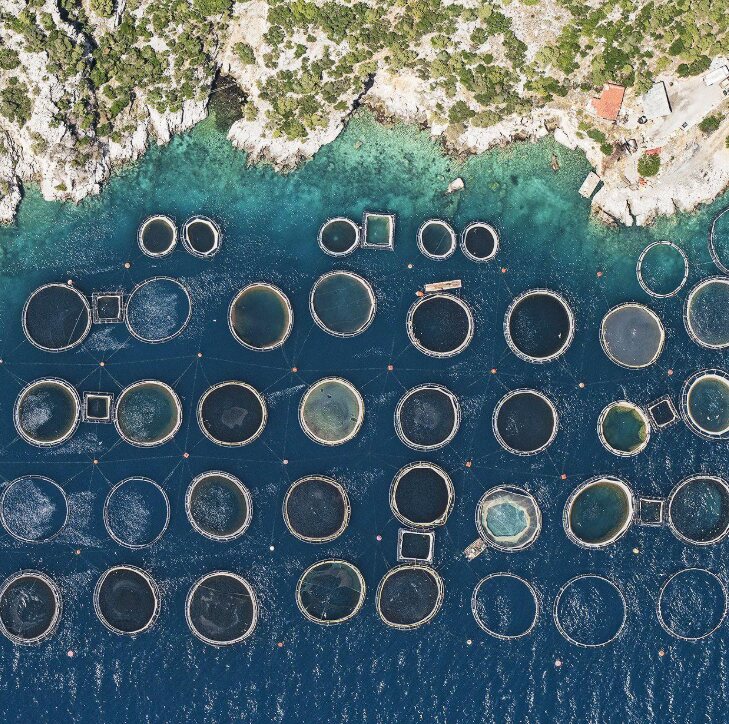
Feed practice is moving too. Fishmeal increasingly comes from processing trimmings, not whole fish, which frees more of the whole-fish catch for other uses, and aquaculture certification schemes set sourcing standards for the marine ingredients that remain.
The direction is clear. Small fish that people want to eat should go to people first, fresh, tinned, dried or smoked, especially where local diets depend on them. What is left, along with the heads and frames from fish processed for food, can feed farms that turn it into more seafood. Fishing and farming both depend on small fish, and they will keep sharing them. The aim is a better split, with more of the catch going straight to people.
Fresh Catch · The SALT. newsletter
Enjoyed this story? There's more where that came from.
Food, oceans, people and ideas. The most interesting stories from SALT., delivered to your inbox.
Free to read. Free to subscribe. Unsubscribe anytime. Privacy
About this story · 13 sources
Sources
- Hicks et al., Nature (2019): Harnessing global fisheries to tackle micronutrient deficiencies
- Lancaster University: Fish micronutrients slipping through the hands of malnourished people
- Pew: Forage fish FAQ
- SeafoodSource: Report: cut forage fish catches in half
- Statistics Iceland: World catch in 2022
- OECD: Policies for the future of fisheries and aquaculture in Peru
- UBC: Peruvian anchovy worth more as food than as feed
- IFFO: Case study: Peruvian anchovy, why feed not food
- Greenpeace Africa & Changing Markets: A waste of fish (2019)
- Frontiers in Marine Science (2023): Migrant small pelagic fishing in West Africa
- FAO: Small indigenous fish in pond polyculture (mola)
- Fiedler et al., Aquaculture (2016): Mola promotion in Bangladesh, via WorldFish
- FAO GLOBEFISH: Small pelagics
Spotted an error? Tell us. We correct the record openly.